
The Wisdom of the Fire Scar: What Waterton Teaches Us About Resilience
Waterton Lakes National Park's 2017 Kenow Wildfire demonstrates that visual "fire scars" mark essential stages of ecological rebirth rather than permanent devastation. Exploring the fine balance between natural processes and human management
By Celeste Hedequist M.P.H · · 5 min read
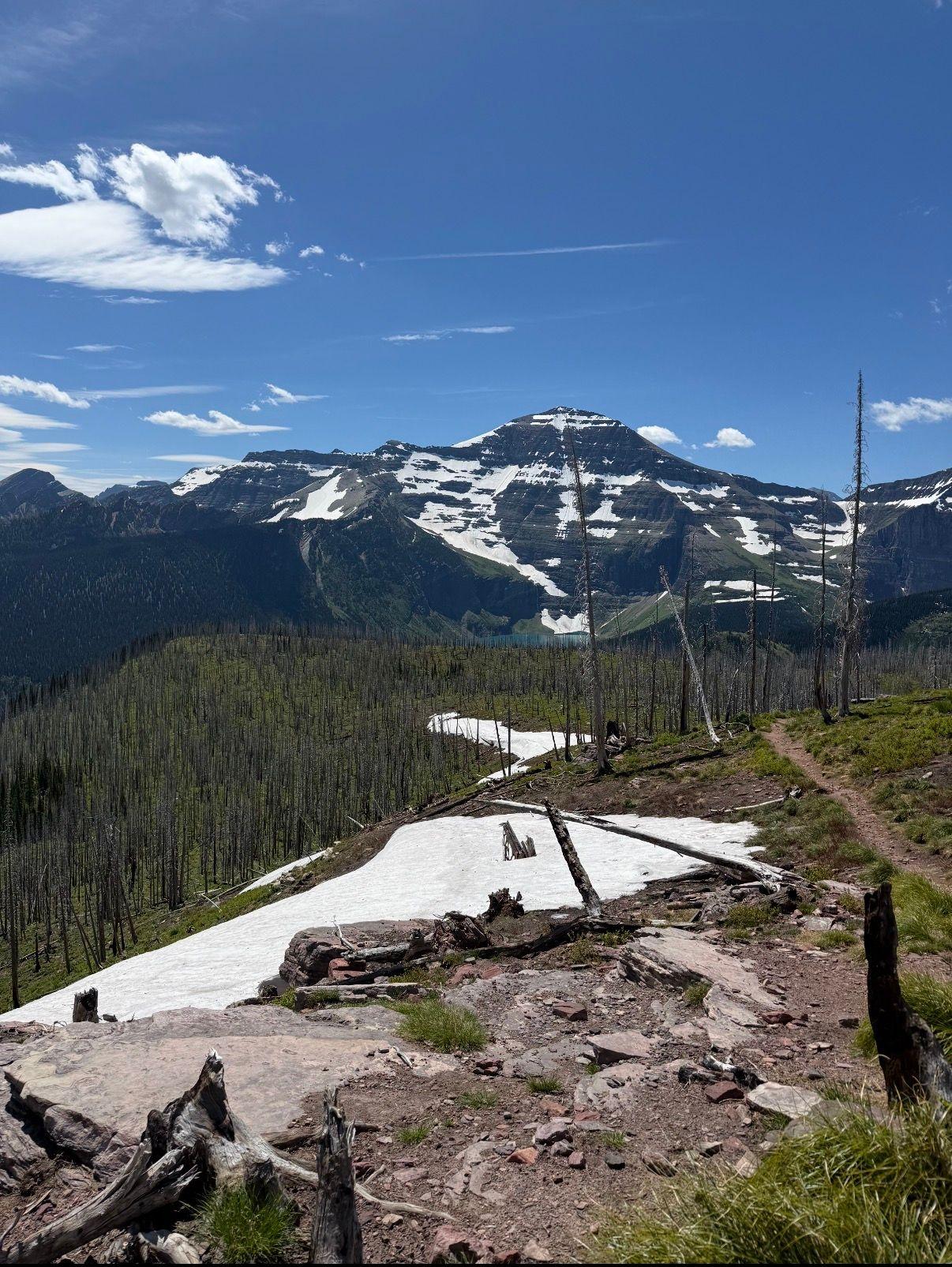
High along the windy ridges of Waterton Lakes National Park, the landscape tells a raw, honest story of destruction and rebirth. Standing amidst the sweeping vistas of the Waterton-Glacier International Peace Park, visitors are confronted with the striking aftermath of the 2017 Kenow Wildfire—a blaze that swept through 38,000 hectares. At first glance, the terrain appears devastated, dominated by stark, silver-gray snags pointing like skeletal fingers toward the sky. Yet, as environmental advocate and traveler Celeste Hedequist M.P.H. points out, a closer inspection reveals a very different narrative: right between the lingering snowfields and rocky slopes, life is aggressively fighting its way back.
Understanding the anatomy of a fire scar is key to understanding ecological resilience. What looks like an environmental tragedy is often nature’s method of resetting the clock.
Reading the Landscape: Anatomy of a Fire Scar
A fire scar leaves clear, distinct signatures across the alpine terrain. When observing a recovering burn site, several classic visual markers reveal the age and stage of the ecosystem's recovery:
- Standing Snags: The high density of gray, standing dead tree trunks (“snags”) across the hillside is the most prominent indicator of a past high-intensity burn.
- Fallen Charred Timber: Charred, fallen logs crisscrossing the foreground form another hallmark of an older burn zone.
- Early Successional Growth: Bright green grasses, hardy shrubs, and opportunistic pioneer plants carpet the forest floor beneath the dead canopy. This confirms the area is well into its recovery phase rather than immediately post-fire.
- High-Elevation Microclimates: Remaining snowfields and exposed rocky slopes highlight the harsh alpine conditions of Waterton, where soil formation and forest regeneration naturally move at a slower pace.

The Messy, Beautiful Ecological Mosaic
We frequently view wildfires as unnatural disasters, but in subalpine mountain ecosystems, fire is the primary architect. A healthy forest was never meant to be a uniform, unbroken carpet of green. Instead, fire creates a dynamic, self-sustaining mosaic—a patchwork of dense living timber, open recovering burn zones, sunlit wildflower meadows, and untouched mountain peaks.
After many wildfires, ecological recovery unfolds through a recognizable but sometimes highly variable pattern of succession:
1. Pioneer Recovery: Grasses, shrubs, and wildflowers are often among the first plants to flourish after fire, alongside vegetation that survives underground and resprouts. Bright purple fireweed is a particularly striking pioneer in many northern and western forests. This early vegetation helps stabilize exposed soil, reduce erosion, and provide food for returning pollinators.
2. Serotinous Regeneration: Some trees are remarkably adapted to fire. Lodgepole pines, for example, may produce serotinous cones sealed with resin. Heat from a wildfire can soften this seal, allowing the cones to open and scatter seeds across newly exposed ground, where reduced competition and increased sunlight can create favorable conditions for germination.
3. Habitat Creation: The standing dead trees left behind, also known as snags, are far from ecologically lifeless. They provide important habitat for woodpeckers and other cavity-nesting birds, while wood-boring insects colonize fire-damaged trees. As snags eventually fall and decay, they continue to provide shelter, organic matter, and habitat for a wide range of organisms.
4. Forest Regeneration: Over years and decades, tree seedlings may rise through the pioneer vegetation and gradually reestablish a forest canopy. The exact trajectory varies with fire severity, climate, moisture, surviving vegetation, and seed availability; some burned areas recover rapidly, while others may remain open or transition to different vegetation communities.
Observing this process in regions like Waterton and nearby Glacier National Park—where NASA Earth Observatory satellite imaging tracks burn scars and vegetation recovery—reminds us that fire revitalizes nutrient cycles and resets competitive balances.
The Paradox of Fire Suppression and Rising Fuel Loads
For nearly a century, early land management operated under a simple rule: extinguish every forest fire immediately. While intended to protect timber resources and human communities, decades of aggressive fire suppression inadvertently disrupted historical fire cycles.
At lower elevations, keeping fire out of the ecosystem allowed dead wood, thick underbrush, and leaf litter to accumulate undisturbed. Forests grew unnaturally dense, turning lower-elevation canopy layers into massive fuel banks. Without periodic, low-intensity surface fires to clear out floor buildup, modern wildfires burn far hotter, faster, and more destructively than they historically did.
The consequences of these megafires extend far beyond park borders. In recent years, massive smoke plumes from Canadian wildfires drifted thousands of miles, heavily impacting regional air quality monitored by agencies like AirNow across the northeastern United States for weeks at a time.
Modern Land Management: A Balancing Act
Today's forestry experts and land managers recognize that eliminating fire entirely is both impossible and ecologically harmful. Modern forest policy has shifted away from absolute suppression toward strategic management.
Land managers constantly balance four core imperatives:
Management Objective
Key Strategy
Community Protection
Maintaining defensible space and suppressing blazes that directly threaten human life and infrastructure.
Preserving Natural Processes
Allowing naturally ignited lightning fires to burn in remote wilderness zones when conditions are safe.
Fuel Load Reduction
Conducting strategic prescribed burns and mechanical thinning to reduce built-up underbrush.
Ecological Education
Helping the public understand . . . fire scar is not simply a sign of destruction, but in many cases an essential stage in the renewal and long-term health of a forest ecosystem.

Knowing When to Step Back
The evolving science of wildland fire management raises fundamental questions about our relationship with the natural world. As Celeste Hedequist M.P.H. reflects when exploring these recovering landscapes, one of the biggest questions in modern ecology is how—or even whether—we can return ecosystems to a truly natural state once we have heavily altered them.
Decades of fire suppression altered forest structures across North America. While active interventions like prescribed burns are essential tools to correct a century of fuel buildup, they prompt a deeper philosophical dilemma: Once we have interrupted natural ecological cycles, is perpetual human management the answer, or should our ultimate goal be to step back?
Ecosystems evolved and maintained their balance over thousands of years without human direction. Well-intentioned attempts to control natural forces frequently trigger unforeseen consequences. The challenge facing modern conservationists is identifying when human intervention actively restores balance, and when it simply substitutes one form of human control for another.
True environmental stewardship may not mean managing every acre of nature forever. Instead, as seen in the recovering slopes of Waterton, the ultimate goal should be restoring ecological processes to the point where ecosystems can once again sustain themselves—allowing natural forces like fire to shape the wilderness with minimal human interference.
Written by